
Living the Adventure Every Day
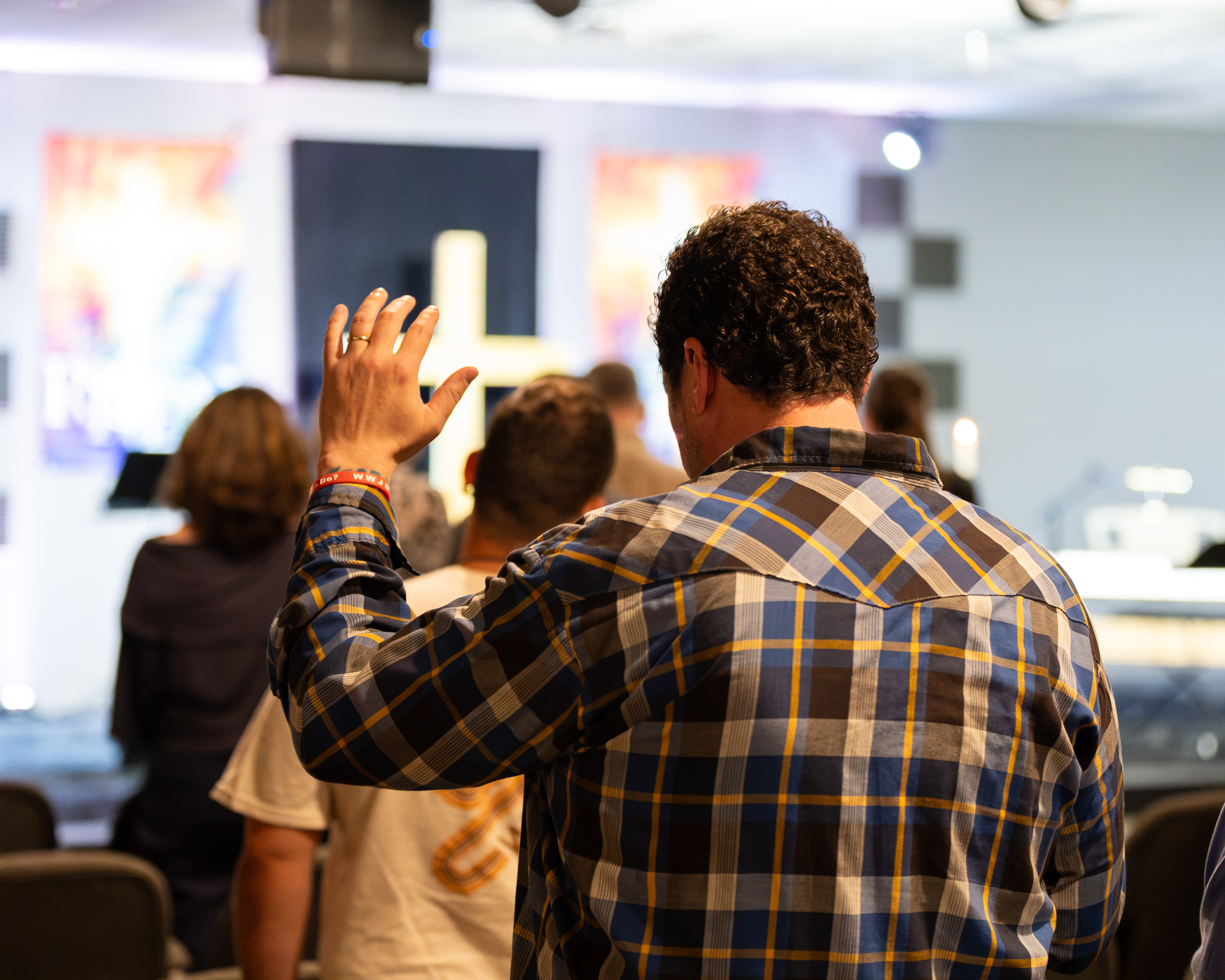
No matter where you’re coming from or what your story looks like, there is a seat for you at Mosaic. Just like individual pieces of glass fit together to create a vibrant artwork, we are a community of everyday people being restored by God’s grace and learning to live out Christ’s love together. Whether you’re asking big questions about faith or looking for a church home, you are welcome here—just as you are.
A Little Bit About Us
Wondering what your first visit will be like? We want you to feel comfortable from the moment you arrive, so here's a look at what you can expect when you join us.
What does a Sunday Service look like?
We know walking into a new church can bring a few questions, so we keep things relaxed, welcoming, and easy to follow. Our Sunday service starts at 10:00 AM and lasts about 75 minutes.
Here is what a typical morning looks like:
- Contemporary Music: We open with uplifting, modern worship music led by our band.
- Down-to-Earth Teaching: You’ll hear a practical, Bible-centered message that connects Scripture to your everyday life.
- Participatory Worship (Liturgy): As an Anglican church, our worship is interactive. "Liturgy" simply means we worship together—through shared prayers, Scripture readings, and weekly Communion. You don't need any prior background to follow along.
- Come As You Are: There’s no dress code here. You’ll see everything from jeans and t-shirts to business casual.
Can’t make it in person?
Join us online live every Sunday at 10:00 AM. We’d love to worship with you!
Do you have anything for kids?
Families are a huge part of our church community! Children are always welcome to stay in the main worship service, but we also offer Kid’s Crossing—a fun, safe, and engaging environment created just for kids ages 4 through 5th Grade.
Here is how Sunday morning works for families:
1. Worship Together: Kids start the morning right alongside their families in the sanctuary for music and opening prayer.
2. Kid’s Crossing: Before the sermon, children are dismissed to their age-appropriate classrooms for a Bible lesson, crafts, and activities.
3. Rejoin for Communion: Kids return to the sanctuary so families can receive Holy Communion and finish the service together.
Have questions or want to let us know you’re coming? Click below to connect with our Kid’s Crossing Director, Beverly McAdams.
Our Denomination
Mosaic is an evangelical Anglican Church in the Anglican Church in North America (ACNA), in the Anglican Diocese of Pittsburgh.
Our Values
We are committed to living out the values of the Gospel of Jesus Christ. Our mission is to love God, love others, and share the good news of Jesus Christ.
Transformation
Through repentance, faith in Jesus, and the work of the Holy Spirit, God transforms our lives from the inside out. As we follow Jesus and grow in His grace, the Holy Spirit shapes us to become more like Him each day.
Restoration
Through Jesus Christ, our relationship with God is restored, and we are made new by His grace. In His victory over sin, Jesus brings freedom, healing, and lasting hope as we find our purpose in Him.
Generosity
Because God has generously blessed us, we joyfully use our time, talents, and resources to serve Him and care for others. We seek to reflect His love by meeting needs, supporting our community, and partnering in His mission around the world.
Authentic Community
We believe life is meant to be lived together, growing in faith through worship, prayer, God's Word, and meaningful relationships centered on Jesus. In community, we encourage one another, serve together, and learn to love, forgive, and celebrate God's work in our lives.
Transformation
Through repentance, faith in Jesus, and the work of the Holy Spirit, God transforms our lives from the inside out. As we follow Jesus and grow in His grace, the Holy Spirit shapes us to become more like Him each day.
Restoration
Through Jesus Christ, our relationship with God is restored, and we are made new by His grace. In His victory over sin, Jesus brings freedom, healing, and lasting hope as we find our purpose in Him.
Generosity
Because God has generously blessed us, we joyfully use our time, talents, and resources to serve Him and care for others. We seek to reflect His love by meeting needs, supporting our community, and partnering in His mission around the world.
Authentic Community
We believe life is meant to be lived together, growing in faith through worship, prayer, God's Word, and meaningful relationships centered on Jesus. In community, we encourage one another, serve together, and learn to love, forgive, and celebrate God's work in our lives.
Our Beliefs
Anglicans are, most fundamentally, Christians. Rooted in the ancient church and affirming the Nicene Creed, Apostles’ Creed, Athanasian Creed, Thirty-Nine Articles of Religion, Jerusalem Declaration, and we like all Christians, believe in and proclaim the good news of Jesus Christ crucified, risen, and ascended.
Our beliefs are best summarized in a document called the Thirty-Nine articles of Religion, the foundational statement of Anglican belief. In it you will see that we both hold to the fundamentals of the ancient church and embrace the central tenets of the Reformers, such as salvation by Christ alone, the authority and sufficiency of the scriptures for defining belief and doctrine, and justification by faith. We are committed to promoting and protecting the biblical gospel and mission to the world, as stated in the Jerusalem Declaration.
The Trinity
There is only one living and true God, who is eternal and without body, indivisible and invulnerable. He is of infinite power, wisdom, and goodness. He is the maker and preserver of all things both visible and invisible. Within the unity of the Godhead there are three persons who are of one substance, power, and eternity—the Father, the Son, and the Holy Spirit.
There is only one living and true God. His existence is everlasting, without beginning or end. He is a spiritual being, not limited by a body. He is free from bodily desires and impulses His power, wisdom, and goodness, are infinite. Of this one true God there are three persons: Father, Son and Holy Spirit. These three persons are identical in substance, power and eternal existence.
The Bible
Holy Scripture contains all things necessary for salvation. Consequently whatever is not read in Scripture nor can be proved from Scripture cannot be demanded from any person to believe it as an article of the faith. Nor is any such thing to be thought necessary or required for salvation. By Holy Scripture is meant those canonical books of the Old and New Testaments whose authority has never been doubted within the church.
Jesus
We believe in Jesus Christ, The Son, who is the Word of the Father, was begotten from eternity of the Father, and is the true and eternal God, of one substance with the Father. He took man's nature in the womb of the blessed virgin Mary, of her substance, in such as way that two whole and perfect natures, the Godhead and manhood, were joined together in one person, never to be divided.
Of these two natures, is the one Christ, true God and true man. He truly suffered, was crucified, died, and was buried, to reconcile the Father to us (restore a right relationship between the Father and us) and to be a sacrifice, not only for original guilt but also for all actual sins of men.
Salvation
We are accounted righteous before God solely on account of the merit of our Lord and Savior Jesus Christ through faith and not on account of our own good works or of what we deserve. Consequently the teaching that we are justified by faith alone is a most wholesome and comforting doctrine.
Baptism
Baptism is not only a sign of profession and a mark of difference by which Christians are distinguished from those who are not baptized. It is also a sign of regeneration or new birth, through which, as through an instrument, those who receive baptism in the right manner are grafted into the church, the promises of the forgiveness of sin and of our adoption as sons of God by the Holy Spirit are visibly signed and sealed, faith is confirmed, and grace is increased by virtue of prayer to God. The baptism of young children is undoubtedly to be retained in the church as that which agrees best with Christ's institution.
Holy Communion
The Supper of the Lord is not only a sign of the mutual love that Christians ought to have among themselves. Rather, it is a sacrament of our redemption through Christ's death. To those who rightly, worthily and with faith receive it, the bread which we break is a partaking of the body of Christ, and similarly the cup of blessing is a partaking of the blood of Christ. Transubstantiation (the change of the substance of the bread and wine) in the Supper of the Lord cannot be proved from holy Scripture, but is repugnant to the plain teaching of Scripture. It overthrows the nature of a sacrament and has given rise to many superstitions. The body of Christ is given, taken and eaten in the Supper only in a heavenly and spiritual manner. The means by which the body of Christ is received and eaten in the Supper is faith. The sacrament of the Lord's Supper was not instituted by Christ to be reserved, carried about, lifted up or worshipped.
Holy Spirit
The Holy Spirit proceeds from the Father and the Son. He is of one substance, majesty, and glory with the Father and the Son, true and eternal God.
The Church
The visible church of Christ is a congregation of believers in which the pure Word of God is preached and in which the sacraments are rightly administered according to Christ’s command in all those matters that are necessary for proper administration.
In keeping with the pattern of the ancient church, Anglicans retain three “orders” of clergy:
- Bishops, who oversee a geographical diocese (a collection of churches or congregations)
- Presbyters or priests, who oversee a church or congregation
- Deacons, who serve those in need within a local congregation
While our congregations are led by clergy, we are governed by councils. On the diocesan level, the council is called a synod or convention. On the parish level, it is called a vestry or parish council. In this conciliar model, both the voice and vote of clergy and laity come together in the decision-making processes of the church.
Prayer
A core Anglican principle is Lex orandi, lex credendi – ‘the law of praying is the law of believing’. This means doctrine is not just an abstract list of rules but a lived reality, ‘encountered and internalized through corporate worship.
The Book of Common Prayer 2019 (BCP), is our primary expression of this principle. They weave the Creeds directly into the living fabric of Anglican worship, shaping belief every time we pray together as a community.

Copyright 2026 Mosaic Church
All Rights Reserved.